

Content Marketing for Businesses: How It Builds Online Visibility
28/09/2026
How a Well-Optimized Website Boost Your Online Presence?
30/09/2026
Categories
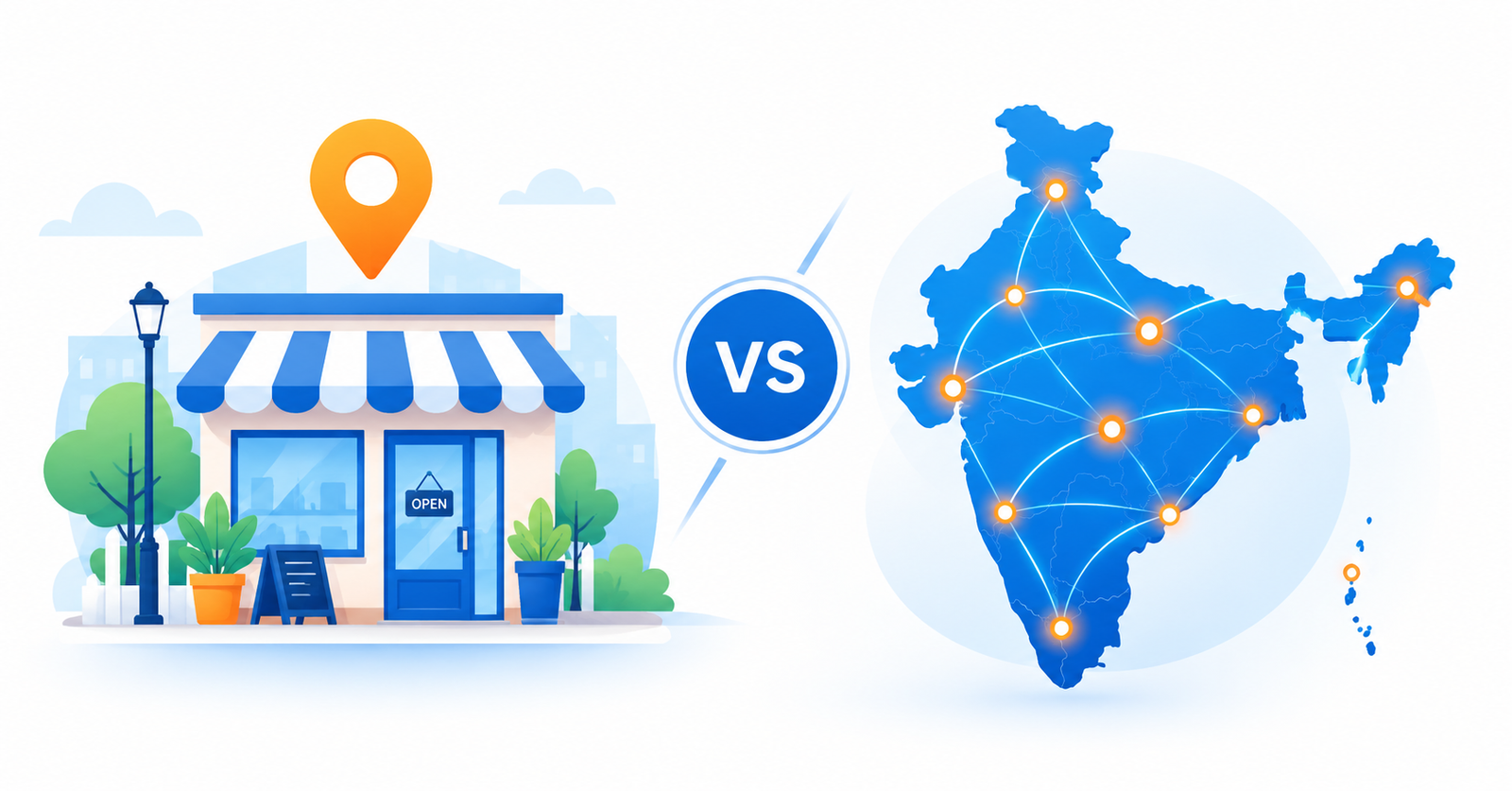
Picture this: you’ve spent months on SEO, yet your phone still isn’t ringing. Meanwhile, a competitor two streets away keeps getting the calls.
Often, the problem isn’t your effort. It’s your strategy. In fact, many owners pick the wrong type of optimization, and the local SEO versus national SEO question is where this mistake happens most.
So, which approach fits your business? In this guide, you’ll learn what each SEO strategy means, how they differ, and how to choose with confidence. You’ll also see simple examples, common mistakes, and tools you can start using today.
What Is Local SEO and Why Does It Matter?
Local SEO helps your business show up when people search for services near them. For example, think of searches like “dentist near me” or “bakery open now.” Google tries to show nearby, relevant results, so your job is to become one of them.
According to Google’s own guidance, local results depend mainly on three things: relevance, distance, and prominence. First, relevance is how well your listing matches the search. Next, distance is how far you are from the person searching. Finally, prominence is how well known your business is, based on reviews, links, and mentions across the web.
This approach has a few core parts: your Google Business Profile, online listings, customer reviews, and pages built for each location you serve. Mobile matters too, since people often search for nearby businesses on their phones while they’re out and about.
Here’s how it works in practice. First, you claim and optimize your Google Business Profile. Next, you keep your name, address, and phone number consistent across online directories. Then you collect genuine reviews and publish pages that mention the areas you serve.
Why does this matter? Because people who search locally are often ready to act. Someone who needs an emergency plumber won’t read ten blog posts. Instead, they’ll call the first trusted business they see.
As a result, a small business can win big in local search. You don’t need the largest budget in the country. You simply need to be the most relevant, trusted choice in your area.
What Is National SEO and How Does It Work?
National SEO aims to rank your website across the whole country, not just in one city. Instead of competing for map results, you compete for standard search results on broader topics. Online stores, software companies, and publishers rely on it the most.
The work looks different, too. First, you research keywords that people search everywhere, not only in one area. Next, you build in-depth content that answers real questions. After that, you earn backlinks from respected websites and keep your site fast, secure, and easy for search engines to crawl.
Technical health matters a great deal at this scale. A clear site structure, fast pages, and smart internal links help search engines understand your content. Meanwhile, detailed articles show readers that you know your subject.
Think of it like building a national brand versus running a popular corner shop. The corner shop wins by knowing its neighbors. In contrast, the national brand wins by earning trust from strangers in many places at once.
Why bother with such a long game? Because the rewards can be big. A strong national presence can bring steady organic traffic without paying for every click, and it builds brand awareness far beyond your home city.
Of course, there’s a catch. Because your audience is the whole country, competition is tougher. Large brands with big budgets often hold the top spots. As a result, you usually need more content, stronger authority, and more patience.
Local SEO vs National SEO: The Key Differences
Both strategies aim for more organic traffic. However, they work in very different ways. Let’s break down the main differences one by one.
Audience and Goals
Local SEO targets people in a specific city, neighborhood, or service area. The goal is usually phone calls, store visits, or bookings. National SEO, on the other hand, targets a nationwide audience. Its goal is often online sales, sign-ups, or leads from anywhere.
Keywords and Competition
Local keywords include a place or a “near me” intent, such as “electrician in your city.” These phrases get fewer searches, but they often bring ready-to-buy visitors. National keywords are broader, like “accounting software,” and they face heavy competition.
Content and Link Building
Local SEO content talks about your area, your services, and your community. Links often come from local news sites, business groups, and partner companies. In contrast, national SEO needs deeper guides, original research, and links from widely respected sites.
Budget and Timeline
Generally, a city-focused plan needs a smaller budget because fewer businesses compete for the same searches. National SEO usually costs more and takes longer. Still, results depend on your industry, your website, and your competitors, so nobody can promise exact timelines.
In short, the first approach is about being the best nearby answer. National SEO is about being a trusted answer everywhere. Neither one is better by default, because the right choice depends on your customers.
Real-Life Examples: Who Needs Which Strategy?
Examples make this easier to see. The four cases below are simple illustrations, not real client stories.
First, imagine a neighborhood bakery. Its customers live within a few miles. Therefore, the neighborhood approach is the clear winner. A complete Google Business Profile, fresh photos, and honest reviews will bring more people through the door than a nationwide campaign ever could.
Second, picture an online store that ships handmade candles across the country. Its customers could live anywhere. So national SEO matters most here. Product pages, helpful buying guides, and strong backlinks will drive growth.
Third, think of a dental clinic with five branches in one region. It needs both. Each branch needs its own location-based setup while the brand benefits from broader articles about dental care. This mix is common for multi-location businesses.
Finally, consider a freelance accountant who works online but gets most referrals from one town. Starting nearby can build trust first. Later, helpful tax guides can reach readers across the country.
Which one sounds most like your business? Keep that picture in mind as you read the next section.
5 Practical Tips to Choose Between Local SEO and National SEO
Still unsure? Use these five tips as a quick decision guide. Work through them in order, and you’ll have a clear answer by the end.
Tip 1: Look at Where Your Customers Live
Start with your sales records or customer list. IIf most buyers come from one city or region, start there first. If orders arrive from many states, national SEO deserves your attention. Real data beats guesswork every time.
Tip 2: Check How You Deliver Your Service
Do customers visit you, or do you visit them? Shops, clinics, and repair services depend on people nearby, which points toward a nearby focus. On the other hand, digital products and nationwide shipping point toward national SEO. Your delivery model often decides the answer on its own.
Tip 3: Study the Search Results
Search your main keywords on Google. If a map with business listings appears near the top, Google sees local intent. If big brands and long guides fill the page, you’re facing a national fight. This quick check takes two minutes and tells you a lot.
Tip 4: Match Your Budget to Your Goals
Be honest about your time and money. A small budget works harder when you focus on one area because you compete against fewer businesses. Meanwhile, national SEO needs steady investment in content and links. So, start where you can win, and grow from there.
Tip 5: Plan for Growth
Where do you want to be in two years? If you plan to open new branches or start selling online, begin with local SEO and add national SEO later. This step-by-step approach keeps your risk low and your results steady.
Here’s a pattern we often see with small business websites. Owners try to rank everywhere at once and end up ranking nowhere. Choosing one clear focus first, then expanding step by step, usually works better.
Common Mistakes That Hurt Your Local SEO and National SEO Results
Even smart business owners slip up here. The good news is that most of these mistakes are easy to fix once you spot them.
Ignoring Your Google Business Profile
Many owners claim the listing and then forget about it. However, outdated hours, missing photos, and unanswered reviews quickly damage trust. Check your profile every week, add new photos, and reply to every review, good or bad.
Skipping Customer Reviews
Reviews work like modern word of mouth. Ask happy customers politely, make the process easy with a short link, and never buy fake reviews. Real feedback builds trust with customers and supports your rankings.
Chasing the Wrong Keywords
A small local shop that targets broad national phrases will burn money fast. Likewise, a nationwide brand that uses only city names will miss huge audiences. Always match your keywords to the people you actually want to reach.
Keeping Business Details Inconsistent
If your phone number or address differs across directories, search engines get confused, and so do customers. Therefore, audit every listing and fix the mismatches. This small clean-up is one of the most useful local SEO tasks you can do.
Expecting Overnight Results
SEO is a slow, steady process. Some businesses quit after a few weeks because nothing seems to move. Instead, set realistic goals, track your progress each month, and give your plan enough time to work.
Tools and Best Practices, Plus What to Expect Next
Helpful Tools to Start With
You don’t need a huge toolkit to begin. First, use the free tools from Google. Google Business Profile lets you manage your local listing. Google Search Console shows how your website performs in search, and Google Analytics reveals where your visitors come from.
For deeper research, paid platforms such as Semrush, Moz, and Ahrefs offer keyword research, rank tracking, and competitor reports. Some of them also help you manage business listings in one place. Pick one that fits your budget, and don’t pay for features you won’t use.
Best Practices That Work for Both Strategies
A few habits make every campaign stronger. Publish helpful content on a regular schedule. Keep your website fast and mobile friendly. Add structured data, also called schema, so search engines understand your pages better.
Most of all, write for people first. Search engines reward pages that truly help readers, so clear answers, honest advice, and real examples always beat keyword tricks.
Here’s a simple routine for your first month. First, complete your Google Business Profile. Next, fix your directory listings. Then publish one helpful page about your main service. Finally, ask five happy customers for reviews.
How will you know it’s working? For local SEO, watch calls, direction requests, and profile views. For national SEO, track organic traffic, keyword rankings, and leads or sales from search. Choose two or three numbers, and check them monthly.
What to Expect Next
So, what comes next? Search keeps changing, and AI-generated summaries now appear in some results. Even so, the basics hold steady: accurate information, real reviews, useful content, and a trustworthy website.
As for timing, local SEO can show early signs of progress within a few months, while national SEO often needs longer. However, these are rough ranges, and every market is different.
Ready to Pick Your Path? Let’s Map Your Next Step
Choosing between local SEO and national SEO comes down to one simple question: where do your best customers live? Start there, and the rest becomes much clearer. Remember, you can always begin locally and grow nationally as your business gets stronger.
If you’d like expert support, Jod Digital Studio is happy to help. We’re an IT, web development, and digital marketing company, and our SEO services are built around your goals and budget. Visit https://surjeet.trohi.in/ to learn more, or contact our team for a friendly chat about your next move.
Frequently Asked Questions
What is the main difference between local SEO and national SEO?
Local SEO helps your business appear in searches from people in a specific city or area, often through map results. National SEO helps your website rank across the whole country for broader keywords. The first targets nearby customers, while the second targets a nationwide audience.
Is local SEO cheaper than national SEO?
Usually, yes. Local SEO competes in a smaller area against fewer businesses, so it often needs less content and fewer links. National SEO typically requires a bigger and longer investment. Still, costs vary by industry and competition, so ask for a custom quote instead of relying on averages.
Can a small business use both local SEO and national SEO?
Yes, many businesses do. A common path is to start with local SEO, build reviews and trust nearby, and then add national content as the business grows. Companies with several branches often run both at once, using location pages for each branch and broader articles for the brand.
How long does local SEO take to show results?
There’s no fixed timeline, but local SEO can show early progress within a few months for many businesses. Results depend on your competition, your profile quality, and how often you earn reviews. National SEO usually takes longer. Be wary of anyone who promises guaranteed rankings or overnight success.
Do I need a Google Business Profile for national SEO?
It isn’t required for a purely online business, but it can still help if you have a physical office or serve customers in person. For local SEO, however, a complete and active Google Business Profile is one of the most important tools you can use.
Which is better for an online store, local SEO or national SEO?
Most online stores benefit more from national SEO because customers can order from anywhere. However, if you also run a physical shop or offer local pickup, adding local SEO can bring extra nearby buyers. Look at where your orders come from, then choose your main focus.
What are the most important local SEO ranking factors?
Google says local results are based mainly on relevance, distance, and prominence. In practice, that means a complete Google Business Profile, consistent business details, genuine reviews, and location-focused website content. You can’t control distance, but you can improve the other two with steady work.
How do I know whether my business needs national SEO?
Check where your customers live and how you deliver your service. If buyers come from many cities, or you sell digital products and ship nationwide, national SEO makes sense. Also search your main keywords on Google. Big brands and long guides in the results signal national competition.
Jod Digital Studio is an IT, web development, and digital marketing company that helps businesses grow online with practical SEO, websites, and marketing strategies. Learn more about our services at https://surjeet.trohi.in/.